

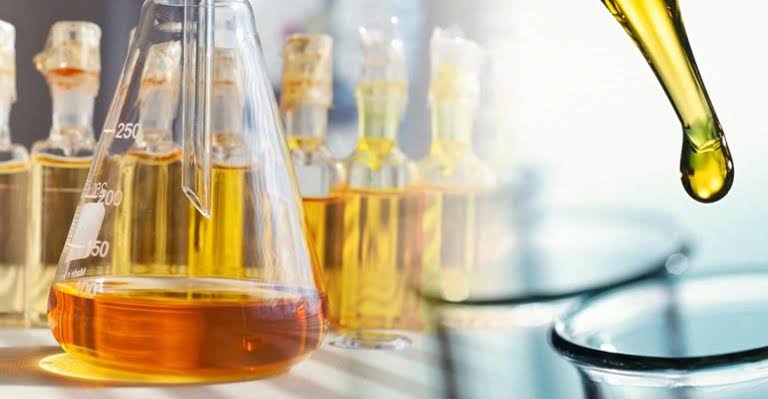
At Alpha Oils (Pty) Ltd, we take pride in producing high-quality lubricating oils that power industries, vehicles, and machinery worldwide. Our manufacturing process combines advanced technology, rigorous quality control, and decades of expertise. Here’s an inside look at how we transform raw materials into premium lubricant
Although there are many types of lube oils to choose from, mineral oils are the most commonly used because the supply of crude oil has rendered them inexpensive; moreover, a large body of data on their properties and use already exists. Another advantage of mineral-based lube oils is that they can be produced in a wide range of viscosities—viscosity refers to the substance's resistance to flow—for diverse applications. They range from low-viscosity oils, which consist of hydrogen-carbon chains with molecular weights of around 200 atomic mass units (amu), to highly viscous lubricants with molecular weights as high as 1000 amu. Mineral-based oils with different viscosities can even be blended together to improve their performance in a given application. The common 1OW30 motor oil, for example, is a blend of low viscous oil (for easy starting at low temperatures) and highly viscous oil (for better motor protection at normal running temperatures).
First used in the aerospace industry, synthetic lubricants are usually formulated for a specific application to which mineral oils are ill-suited. For example, synthetics are used where extremely high operating temperatures are encountered or where the lube oil must be fire resistant. This information will focus on mineral-based lube oil.
Sourcing Base Oils
The journey begins with selecting the right "Base Oils", the primary component of lubricants (typically 70–90% of the final product).
* Crude Oil Refining: Base oils are derived from crude oil through a process called "Distillation. Crude oil is heated in a refinery, separating it into fractions. The heavier fractions are further processed to create base oils.
* Synthetic or Bio-Based Alternatives: For synthetic lubricants, chemically engineered base oils (e.g., polyalphaolefins) or bio-based oils (from renewable sources) are used for enhanced performance and sustainability.
Refining and Purification
Raw base oils undergo refining to remove impurities and improve performance characteristics:
* Solvent Refining: Solvents like furfural extract unstable hydrocarbons and contaminants.
* Hydrotreating: Hydrogen is used under high pressure to saturate molecules, enhancing oxidation stability and viscosity.
* Catalytic Dewaxing: Removes waxes to ensure smooth flow at low temperatures..
Additive Blending: Tailoring Performance
Base oils are blended with "Specialized Additives" (10–30% of the formulation) to meet specific requirements:
* Anti-Wear Agents: Protect metal surfaces under high pressure (e.g., zinc dialkyldithiophosphate).
* Detergents & Dispersants: Keep engines clean by preventing sludge and deposits.
* Viscosity Index Improvers: Maintain consistent viscosity across temperatures.
* Antioxidants: Extend oil life by resisting thermal breakdown.
* Friction Modifiers*: Improve fuel efficiency.
Our chemists customize additive packages for applications like *engine oils, industrial gear oils, hydraulic fluids, and greases
.
Quality Control and Testing
Every batch undergoes rigorous testing to ensure compliance with API, SAE, ACEA, ISO,, and OEM standards:
* Viscosity Checks: Confirm optimal flow properties.
* Flash Point Tests: Measure safety under high heat.
* Oxidation Stability: Simulate long-term performance.
* Field Trials: Real-world testing in partnership with clients.
.
Packaging and Distribution
Finished lubricants are packaged into barrels, drums, or bulk containers. We prioritize eco-friendly packaging and efficient logistics to deliver products globally while minimizing our carbon footprint.
.
Sustainability in Lubricant Manufacturing
As a forward-thinking manufacturer, we integrate sustainable practices:
* Recycling used oils.
* Reducing emissions via energy-efficient refining.
* Developing biodegradable lubricants for eco-sensitive industries.
.
Why Choose Alpha Oils (Pty) Ltd?
Our end-to-end control over the manufacturing process ensures reliability, performance, and innovation. Whether you need automotive, marine, or industrial lubricants, we engineer solutions that exceed expectations.